

Key Takeaways
- Dry eye can bring stinging, redness, and blurry vision that shifts as your day goes on.
- Daily disposable lenses give you a fresh, clean pair every morning.
- Silicone hydrogel and moisture-rich designs can help your eyes stay comfortable for longer.
- Rigid gas permeable and scleral lenses can offer comfort and sharp vision for dry eye or irregular corneas.
- Simple habits and the right drops can help ease dryness while you wear contacts.
A Range of Contact Lenses Options
Several contact lens options are available for people for dry eyes, including daily disposables, silicone hydrogel lenses, and moisture-rich designs, as well as specialty rigid gas permeable and scleral lenses. A comprehensive eye exam with our team at Tecumseh Eyecare can help your optometrist find lenses that suit your eyes, your prescription, and your routine.
What Is Dry Eye?
Dry eye happens when your eyes produce either too few or poor quality tears. This results in a lack of moisture, which can cause a number of different uncomfortable symptoms, including:
- Stinging, burning, or red eyes.
- Blurry vision that comes and goes.
- Tired eyes.
- Difficulty wearing contacts.
- Light sensitivity.
What Contributes to Dry Eye?
Several factors can play a role, and many people are affected by more than one:
- Your eyes may make fewer tears with age, certain medications, or some health conditions.
- Blocked oil glands along your eyelids cause your tears to dry out too fast.
- Wind, smoke, dry air, and blinking less often can all leave your eyes feeling parched.
Lens Materials & Features for Dry Eyes
Daily Disposable Contacts
Many people with dry eye find that daily lenses can offer relief. Here are some of the advantages:
- You start each day with a clean pair, so fewer irritating deposits build up.
- Thin, breathable materials.
- They may help you stay comfortable in heated offices, air-conditioned rooms, or after long hours in front of a screen.
Silicone Hydrogel Lenses
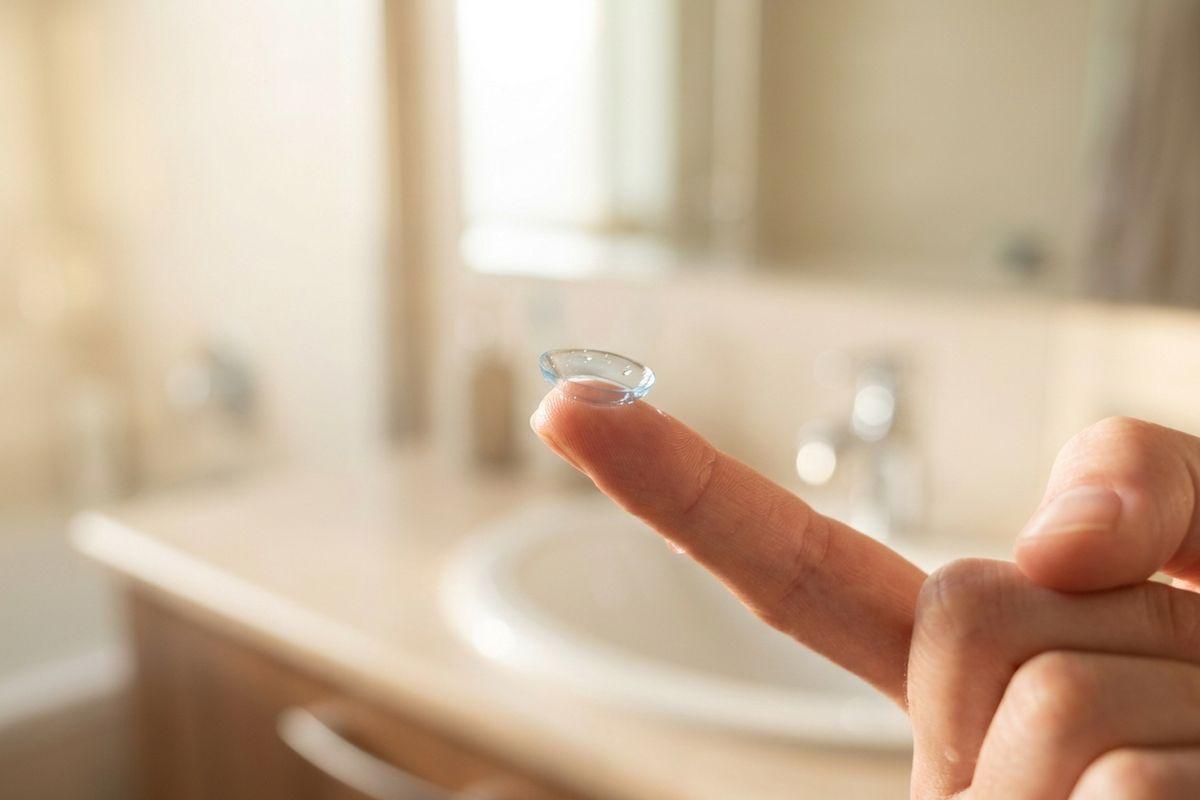
Silicone hydrogel is a soft lens material that lets more oxygen reach your eye. These lenses also help your eyes stay moist longer, whether you’re finishing a work shift or cheering at your child’s hockey game.
Specialty Lenses
If you have severe dryness or an irregularly shaped cornea (the clear, front layer of your eye), specialty lenses may increase your comfort.
Rigid Gas Permeable Lenses
Rigid gas permeable lenses are firm yet breathable. They can often provide both comfort and sharp vision for people with dry eye or corneal irregularities.
Scleral Lenses
Scleral lenses are larger than standard contacts. They vault over your cornea and rest on the white part of your eye. A small reservoir of fluid then fills the space between your eye and the lens. Scleral lenses can be a good option if you already have keratoconus or extreme dry eye.
How to Ease Dry Eyes While Wearing Contacts
Good At-Home Habits
Small changes to your routine can also help boost your comfort. Here’s what we recommend:
- Take regular breaks from your screen to rest your eyes and blink.
- Keep your hands away from your eyes, even when they feel itchy.
- Limit time in dusty or dry air, and wear sunglasses outdoors on windy days.
Changing Your Lenses & Booking a Consultation
If dryness persists or worsens, we might also recommend the following:
- Lubricating or medicated drops that suit your lenses.
- Switching from monthly lenses to daily disposables.
- A dry eye consultation to check your oil glands and determine the root cause of your discomfort.
Everyone’s eyes are different, so the right option depends on your situation. For example, someone who wears their contacts at the office might need different lenses than someone who only wears them on the weekend.
Find Comfortable Contacts for Your Dry Eyes
The right lenses and good daily habits can help you wear contact lenses comfortably. Book an appointment with our team at Tecumseh Eyecare to talk about your symptoms and find contacts that fit your eyes and your lifestyle.